For CMOs and startup founders, a content calendar often feels like a milestone to be crossed. The dates are filled. The themes are approved. The next quarter is under control. But filling in the gaps on a spreadsheet is not the same as building a calendar that works.
In B2B markets, where purchase decisions stretch across 6–12 months and buyers complete nearly 70% of their research before ever speaking to sales, the real impact of a calendar shows up long after it has been finalized1. How deliberately each piece ties in with the content strategy makes all the difference.
This is where most content calendars fall short. They reduce strategy to scheduling and intent to activity. What gets tracked are dates and deliverables instead of the buyer’s evaluation process. The result is content that shows up consistently, but rarely moves decisions.
A strong content calendar is not a scheduling document. It is a system that translates intent into momentum, ensuring every piece earns its place in the buyer’s journey and the brand’s narrative.
If you already have a calendar in place, relook at it to ensure it is designed to drive outcomes, and not simply to maintain activity. If you are a startup looking to build a content calendar, get it right the first time. Use the following five principles to challenge your thinking and pressure-test what you have already built.
1. Start with Intent, Not Dates
A common mistake in content calendar creation is starting with dates and working backwards. This often leads to reactive content rather than intentional messaging.
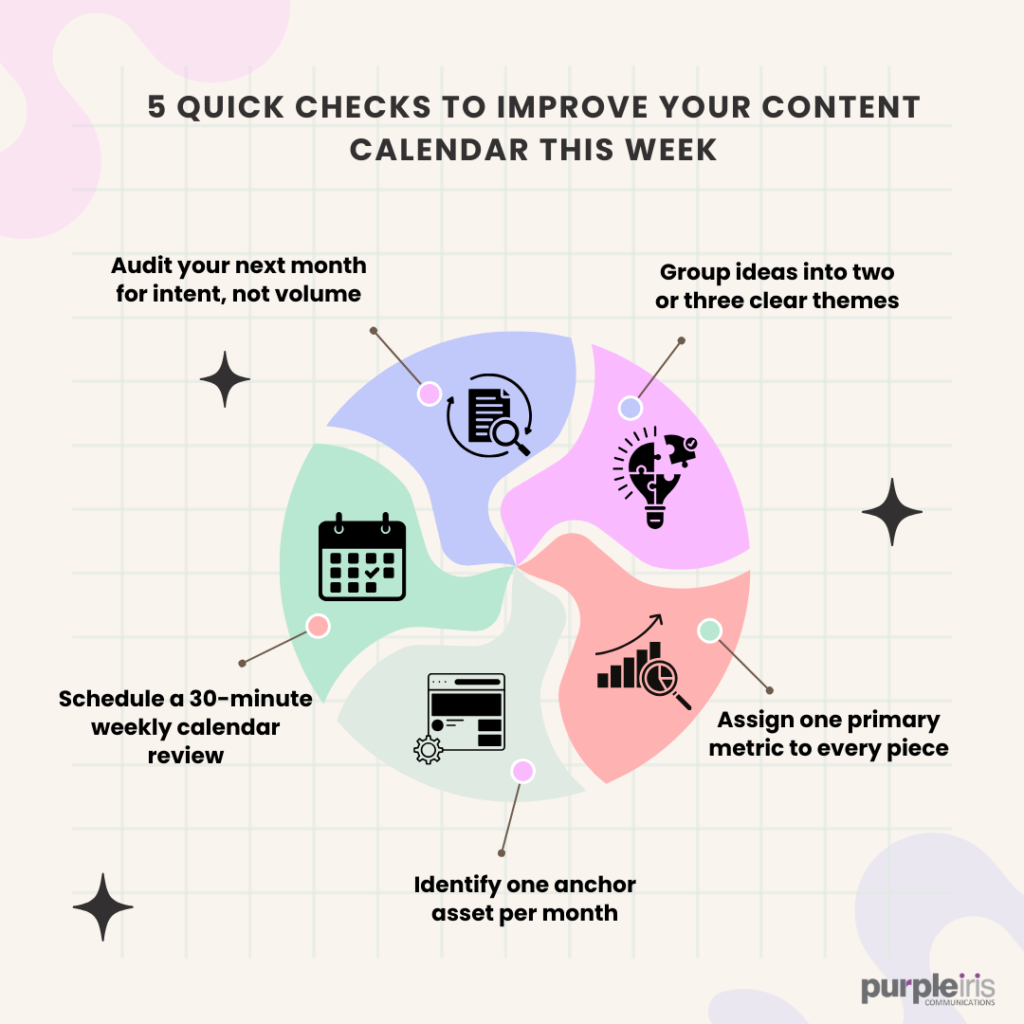
Before adding an item to the calendar, ensure each piece answers one key question:

A strong content calendar strategy begins with marketing intent. That intent could be educating a first-time buyer, supporting a product launch, reframing a category narrative, or reinforcing trust with existing customers. When intent is clear, decisions around format, timing, and distribution become far easier.
A useful filter to apply before locking any calendar entry:
- Objective: What change in perception or action are we aiming for?
- Audience signal: What question or pain point triggered this idea?
- Format: Blog post, email, LinkedIn post, founder POV, or long-form asset?
- Distribution: Where will this live, and how will it be amplified?
- Success metric: What tells us this worked?
2. Anchor Themes to Audience Moments

Audience moments might include buying cycles, budget-planning windows, regulatory changes, funding rounds, or shifts in how a category is discussed. These moments give your content urgency and context.
Instead of planning dozens of disconnected pieces, group content into themes or pillars that reflect what your audience is dealing with currently. For example:
- A two-week theme during your client’s typical annual planning season, picking topics that would resonate with those actively shortlisting vendors. For example, your firm offers tax consulting and outsourcing to CPAs in the U.S.. Use the June-September window to cover topics such as smart ways to expand capacity without increasing overhead or how to reduce burnout at a time of a resource crunch.
- A quarter dedicated to reframing how your offerings alleviate pain for buyers at a time of sudden market changes. For example, the Internal Revenue Service (IRS) in the U.S. announces stricter digital documentation requirements and tighter audit scrutiny for pass-through entities. The content calendar of the same taxation service provider now needs to accommodate topics that reflect the new reality. For example, a white paper positions the company as a compliance partner for regulatory volatility and a series of articles from the company’s leadership covering different angles.
This approach brings clarity across blogs, emails, and social channels, making it easier to plan B2B content that reinforces a single narrative instead of scattering attention because ideas build on each other rather than competing for attention.
3. Design for Formats that Scale

A single strong blog post can become:
- A short email for subscribers
- 2-3 LinkedIn posts exploring different angles
- A talking point for sales outreach
- A reference asset for future thought leadership
Around each anchor, plan supporting formats that extend its reach and lifespan. Repurposing helps amplify your message across channels where your audience spends time.
4. Protect Quality with Clear Guardrails
Consistency only matters if quality holds. As teams scale content production or introduce AI-assisted workflows, brand voice and depth are often the first to slip. That risk increases when calendars are packed without clear editorial standards.

Every content calendar should be supported by simple but firm guardrails:
- Which opinions the brand is willing to take and which it avoids
- The level of evidence expected to be covered in thought leadership
- Tone guidelines for founder content versus brand content
- Clear rules on where AI can assist and where human expertise is non-negotiable
If quality guidelines are not embedded into the calendar, they tend to disappear under deadline pressures.
5. Treat the Calendar as a Living System
A rigid calendar breaks the moment reality intervenes. Market shifts, trending conversations, customer wins, and unexpected insights should be able to reshape priorities without derailing the entire plan.
Content calendar hygiene includes:

- A short weekly review to adjust sequencing or formats
- A monthly performance check to identify which themes deserve deeper investment
- A quarterly audit to retire ideas that no longer serve business priorities
Metrics should live alongside calendar entries, not in a separate dashboard no one checks. This creates faster feedback loops and sharper decisions about what to double down on. When done well, the calendar becomes a living document that balances planned authority building with timely, relevant content.
A Strong Calendar Earns Trust While the Business Scales
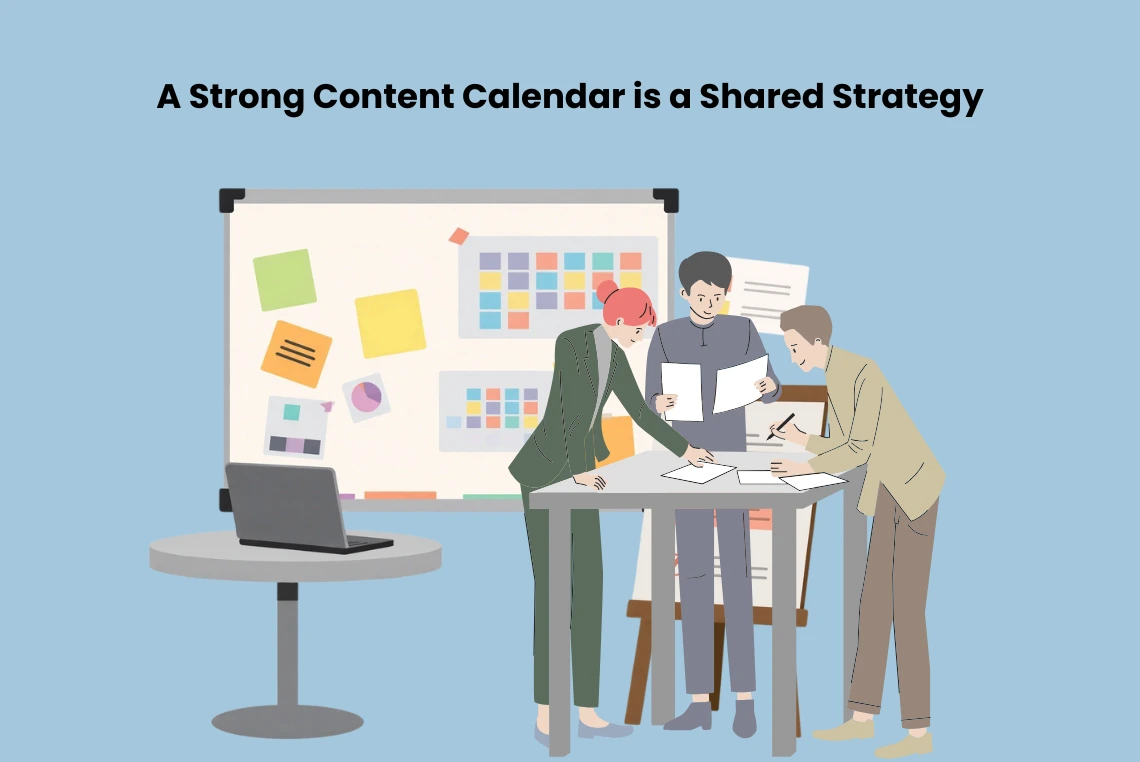
Knowing how to create a content calendar is like knowing how to draw a map. Helpful, but useless if you do not know the destination or why you are going there. The calendars that perform are grounded in strategy, shaped by changing audience reality, and protected by discipline around quality. When those elements are baked into content calendar planning, the calendar becomes a compounding growth asset.
For teams without a full in-house writing function, building this system from scratch can feel overwhelming. At Purple Iris Communications, we partner with B2B tech companies to create expert-led, audience-aligned content. From email campaigns to thought leadership, we help establish a cadence that influences how your market thinks about you. Talk to us to help you build strategic, measurable, and high-impact content.